


5 Top Tips for Embracing Nature Positive Travel on Your Next Adventure
- MOYO Training
- Jul 24, 2025
- 3 min read

In today's rapidly changing world, the importance of protecting our environment cannot be overstated. Nature positive travel promotes conservation and sustainability by encouraging travellers to engage with the natural world while minimising our impact. Not only can this enhance our experiences, but it also helps preserve the beauty of our planet for future generations. Here are five essential tips to help you embrace nature positive travel on your next adventure.
Choose nature-friendly accommodation
According to Booking.com research, 65% of travellers are more likely to book 'eco-friendly' accommodation. That means choosing providers that embrace sustainable practices such as using solar energy, recycling, saying no to single-use plastics, growing their own food, and conserving water. But at MOYO, we think that actions to reduce negative impact should be expected as a minimum.
Instead, we should opt for accommodation providers that actually increase positive impact. For example, this resort in the Caribbean is regenerating coral reefs whilst educating guests; and several hotels in Switzerland are opening insect hotels, birdhouses and hedgehog shelters as part of a 'Bees & Friends' hotel cooperation.

Support conservation and communities
Engaging in activities that respect the environment is key to nature positive travel. Spending more time outdoors in nature is not only a fantastic way to explore new places, it's also proven beneficial for our health and wellbeing. Opting for low-impact adventures such as hiking, kayaking, or wildlife watching can be great options.
Nature-based tourism can provide an alternative source of income for local communities, reducing the need for destructive activities like cattle farming, logging, and illegal poaching—and instead encouraging local people to utilise their skills to protect wildlife and precious ecosystems, whilst generating an income from tourism.
Why not also consider contributing to conservation efforts as you travel, through voluntourism (a blend of volunteer work and tourism)? This could look like helping out at a wildlife sanctuary/research station, or participating in a local beach clean-up.
Don't feed the bear
...or any other wild animal, for that matter!
We've all seen the news coverage in recent times about people feeding bears from their car or on the road side, in places like Canada, Alaska, and Romania—and subsequently being attacked, in some cases mauled to death.
Bears (and other wildlife) that have been fed by humans will habitually return to the same spot, and once they are food conditioned, can often become aggressive. This human-wildlife conflict is worsening as sources in their natural habits gets scarcer (due to impact of climate change), and they begin to associate humans with food. Sadly, this not only presents a huge danger to humans that try to interact with them but it often ends, sadly, in wildlife being euthanised.
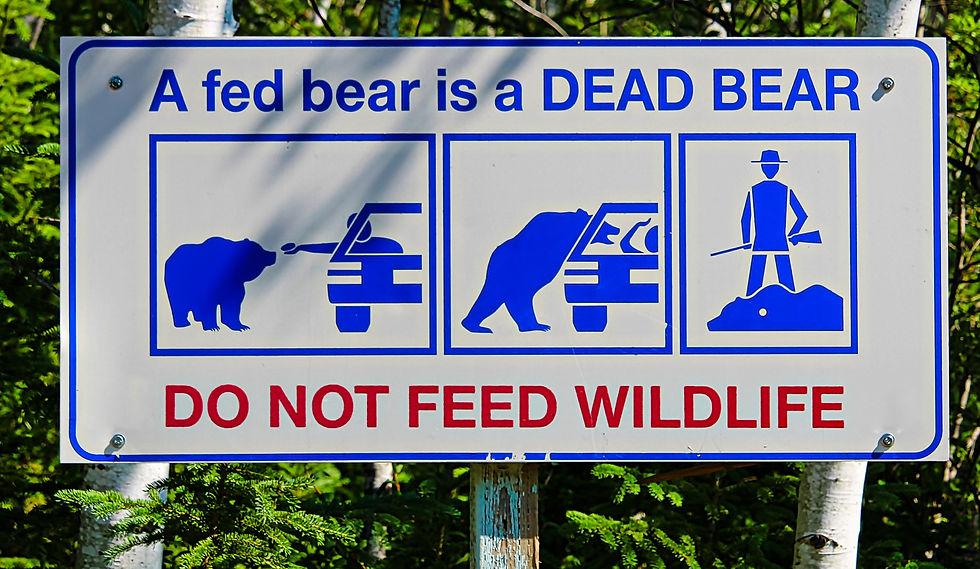
With many species already endangered, the consequences of human-caused conflict whilst travelling can't be understated. No selfie is EVER worth risking your life for and—even more so—the life of a wild animal.
Take only photos, leave only footprints
Understanding and practicing the 'Leave No Trace' principles is essential for minimising your impact on nature. This involves staying on marked paths, removing all trash (bringing reusable items, like water bottles and shopping bags, wherever possible) and respecting wildlife by observing from a distance.
It can also be tempting to take a souvenir from nature, like shells on the beach, to remember our experiences. But did you know that shells serve as vital habitats for various marine creatures, such as hermit crabs, fish, and other invertebrates—and contribute to a healthy and stable environment. Removing them can disrupt these delicate balances and potentially lead to erosion and habitat loss.
Following these simple guidelines can help protect ecosystems and preserve natural landscapes for generations to come.

Stay informed and share your learnings
Take the time to learn about the ecosystems you will visit. Understanding the local flora, fauna, and environmental challenges can deepen your appreciation for natural beauty. Reflect on your experiences and share what you've learned on social media or blogs to inspire others to adopt nature positive travel practices. Highlighting initiatives, like beach clean-up efforts, can further motivate your friends and family to participate and raise awareness.
Simple, but impactful
Embracing nature positive travel is vital for preserving our planet as we explore its wonders. Making thoughtful decisions—from where we stay to how we enjoy our time—can significantly benefit the environment. Equip yourself with these simple yet impactful strategies, and get ready to set off on an adventure that respects and uplifts the natural world. Safe travels!
We always love to see how are community is implementing nature positive tourism, so don't forget to tag us @moyotrainingfoundation with hashtag #naturepositivetourism so we can share your ideas!


Comments